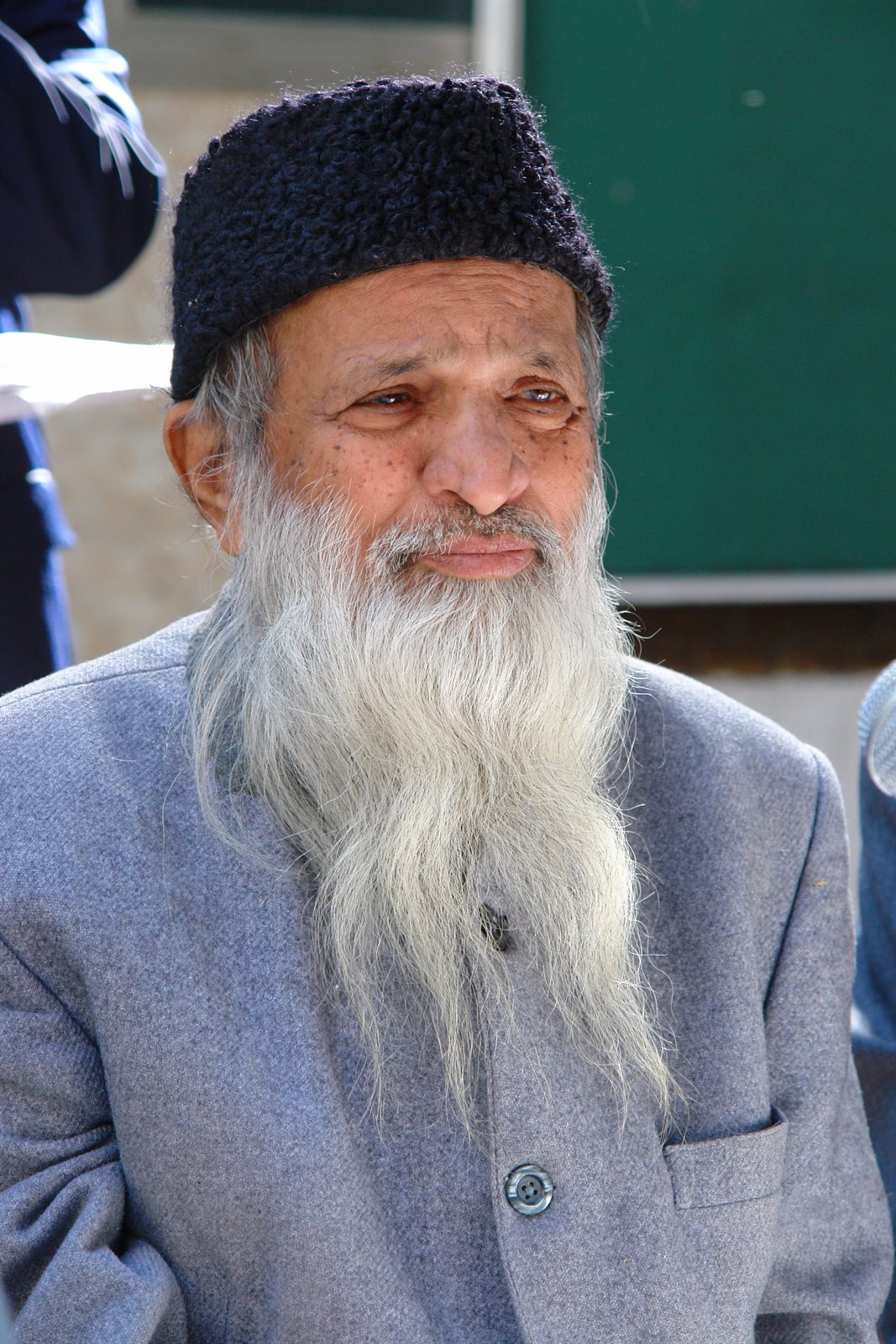
If you grew up in Pakistan, you did not need anyone to explain who Edhi was. You saw his ambulances — battered, silver and red, everywhere — long before you understood what they meant. He was simply a fact of the country, the way the weather is a fact.
Abdul Sattar Edhi built, more or less with his own two hands and a begging bowl, the largest volunteer ambulance service in the world. But the ambulances are only the part you can see. Behind them were orphanages, shelters for women with nowhere to go, homes for the old and the unwell that no one else would touch, and morgues that washed and buried the unclaimed dead with dignity. Outside his centres he placed a steel cradle — a jhoola — with a sign that asked people not to harm an unwanted baby, but to leave it there instead. Thousands of people are alive today because of that cold metal cradle, and the man who refused to judge whoever left a child in it.
What undoes me about Edhi is not the scale of it. It is the smallness of the man inside it. He owned two sets of clothes. He lived in a bare room beside his office. He drew almost nothing from an organisation that handled fortunes, and he washed the bodies himself when there was no one else to do it. When people asked why his ambulances did not stop to check a person’s religion before lifting them off the road, he gave the answer that should have ended the argument forever: that his ambulance was more Muslim than the ones asking the question, because it stopped for every human being.
I think about him a great deal from here. It is fashionable, especially among those of us who left, to talk about Pakistan as though it were only its problems — the corruption, the chaos, the long familiar list. And the list is real. But Edhi is also real, and he was not an accident, and he was not alone. He was just the brightest example of a kind of quiet, unbranded goodness that the country produces in far greater quantities than it is ever given credit for.
He died in 2016, and for once the whole country agreed about something. He was given a state funeral, and the man who had spent his life collecting the abandoned was, at the very end, claimed by everyone.
I am not a religious writer, and this is not a sermon. I only think that if you want to know what a country is actually capable of, you should not look at its loudest men. You should look at its kindest one. Ours drove an ambulance.